Burst Pipe Water Damage in Costa Mesa, CA
Burst pipe water damage in Costa Mesa is the most common cause of a serious indoor water loss, because a supply line is under constant pressure and keeps producing water until somebody closes a valve.
The important thing about a burst supply line is that it is under constant pressure. A drain leak releases water only when something is draining. A supply failure keeps producing water at mains pressure until somebody closes a valve, which is why the single most useful thing any property owner can know is where their main shutoff is.
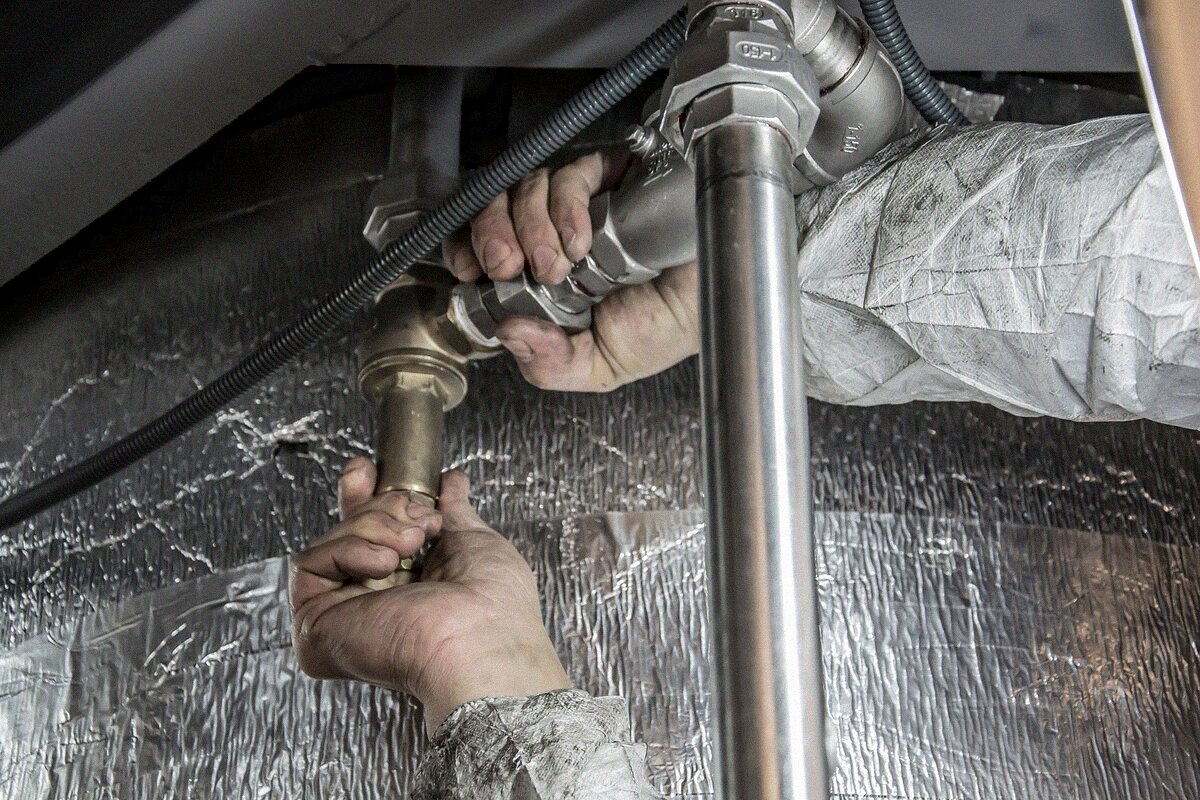
Shut Off the Water First
Before anything else, close the main. In most Costa Mesa houses it is either at the property line in a covered box near the pavement, or on an exterior wall near the front of the house, often close to where the hose bib is. Many properties also have individual angle stops under each sink and behind each toilet, and a dedicated valve on the water heater. Turning the nearest one is faster if you can identify it with certainty, and turning the main is the reliable answer if you cannot.
A supply line at typical residential pressure moves a great deal of water in an hour. The difference between a leak stopped in ten minutes and one stopped in two hours is frequently the difference between drying one room and replacing the flooring in three. It is worth finding your shutoff before you need it, and worth making sure it turns, because an old gate valve that has not been operated in twenty years sometimes will not.
Cut power to the affected area at the breaker if water is anywhere near outlets, extension leads, or ceiling fixtures. Water coming through a ceiling and pooling in a light fitting is a genuine electrical hazard rather than a theoretical one.
What Bursts, and Why It Varies by Neighbourhood
The failure mode depends heavily on the age of the plumbing, which in Orange County means it depends on when the house was built.
| Era | Typical material | How it fails |
|---|---|---|
| 1950s and earlier | Galvanised steel | Decades of internal corrosion and scale narrow the bore until the pipe perforates. One failure usually indicates the condition of the whole system |
| 1960s to 1970s | Copper | Pinhole leaks from internal corrosion. Low volume and slow, so the damage is often extensive before anything is visible |
| Late 1970s to early 1990s | Polybutylene | Fails at the fittings rather than along the pipe, frequently without warning |
| 1990s onward | Copper and PEX | The pipe itself rarely fails. Losses come from fittings, valves and appliance connections |
Alongside the pipework itself, a short list of components causes a disproportionate share of losses. Braided stainless washing machine hoses fail at the crimp, usually while nobody is home. Water heaters fail at the tank once past service life, releasing their full contents and then continuing to refill. Toilet supply lines and fill valves fail quietly and can run for hours. Refrigerator ice maker lines, being small and often plastic, fail behind an appliance nobody moves.
Costa Mesa's housing profile puts most properties squarely in the middle of that table. Census estimates put around 68 percent of the city's housing as built before 1980 and roughly 46 percent before 1970, so original copper at pinhole age is the single most likely scenario, with genuine galvanised steel in the oldest 1950s stock and a real polybutylene population in the 1970s and early 1980s band.
Why a Burst Pipe Inside a Wall Is Worse Than It Looks
A pipe that bursts in the open, under a sink or in a garage, announces itself and gets dealt with. A pipe that fails inside a wall or above a ceiling releases water into an enclosed assembly where insulation holds it against framing and drywall, and where nothing is visible until the material outside the cavity has already been wet for a while.
By the time a stain appears on a wall, moisture has generally wicked upward from the base on both faces of the drywall, saturated the insulation in that bay, and spread outward under the flooring. That is why a small visible mark leads to a much larger area being opened up, and why moisture mapping precedes any cutting. The wet perimeter routinely extends several feet past what is visible.
Tell Us What Has Happened
The line is answered 24 hours a day, every day of the year. If water is still running, shut off the main first, then call.
Why Costa Mesa Property Owners Choose Us
The Wet Cavity Gets Opened and Dried
A pipe that failed inside a wall leaves saturated insulation and wet framing behind a finish that can be made to look acceptable in an afternoon. Moisture mapping establishes how far the water went, insulation that took water comes out because it cannot be dried in a closed cavity, and the wall is dried to a reading before anything is closed up. Sealing a wet cavity behind new drywall is the single most common way a repaired burst pipe becomes a mold job.
The Failure Gets Diagnosed as Well as Repaired
On a 1950s galvanised or 1960s copper system, one failure is usually a statement about the condition of the whole installation rather than an isolated event. The immediate repair gets done, and you are told plainly what the rest of the system looks like, so a decision about repiping is made with information rather than after the third emergency. What that costs and whether it is worth it is your call to make.
Documented From the First Photograph
How long a pipe has been leaking changes what the job is, and that is established on evidence rather than description. The condition is photographed before anything is moved, the discovery is recorded, and the moisture readings are logged from day one. A leak found within hours and one that has been weeping for months need different work, and the documentation is what tells them apart.
A common call from a garage water heater
The situation: a water heater at the end of its service life that let go overnight in an attached garage, releasing its tank and then continuing to refill. Water across the garage slab, under the shared wall, and into the carpet of the adjoining bedroom.
What gets done: supply isolated at the heater valve and the tank drained, then extraction on the garage slab and sub-surface extraction on the bedroom carpet to pull water out of the pad. Moisture mapping across the shared wall, which had wicked upward on both faces, then baseboard and the lower drywall removed on the bedroom side and saturated insulation taken out of the affected bays. Drying set on both sides of the wall with daily readings against a dry standard.
The result: the bedroom carpet is saved because the pad was extracted rather than surface-dried, the shared wall is dried on both faces instead of only the side the damage was noticed on, and the failed heater is identified as a service-life failure rather than a one-off accident, which is what tells the owner the rest of the system needs looking at.
Before you sign anything, know the warning signs
A short guide to the things that separate a straight operator from a bad one in this trade, plus how to check a California contractor licence in about two minutes.
Frequently Asked Questions
Where is my main water shutoff?
Most commonly one of two places: in a covered box at the property line near the pavement, or on an exterior wall toward the front of the house, often near a hose bib. Many properties also have individual valves under sinks, behind toilets and at the water heater. It is worth locating yours now and confirming it turns, because an old valve that has not been operated in years sometimes seizes.
One pipe failed. Do I need to repipe the whole house?
Not necessarily, and it depends on the material and its age. On galvanised steel from the 1950s or copper from the 1960s that has never been touched, a failure is usually representative of the whole system rather than bad luck in one spot, and repeated emergency repairs can cost more than a planned repipe. On a newer system where a fitting or an appliance connection failed, replacing that component is normally the whole answer.
How do I know if I have polybutylene?
It is typically grey, sometimes blue or black, flexible rather than rigid, and around half an inch to an inch across. Look at the water heater, under sinks, and where the supply enters near the main shutoff. It was installed from roughly the late 1970s, which corresponds to part of Costa Mesa's building period, and it characteristically fails at the fittings.
Can I stop the water without finding the main?
Usually yes, if you can identify the fixture. There are angle stops under sinks and behind toilets, and a dedicated valve on the water heater. If the source is not obvious or the valve will not close, the main is the reliable answer. If neither works, the water utility can shut the service at the meter, and that call is worth making rather than waiting.
Related Services
Water Damage Restoration
Full water damage response for Costa Mesa homes, from the first extraction pass through to drying, clearance and repair.
Read more →Slab Leak Water Damage
Under-slab supply leaks in the slab-on-grade housing that dominates Orange County, located without opening the whole floor.
Read more →Emergency Water Extraction
Standing water pulled out fast, before it moves into subfloors, wall cavities and the units next door.
Read more →Water Damage Repairs and Reconstruction
Putting the property back: drywall, texture, paint, baseboard, cabinetry and flooring, with the handoff explained in writing.
Read more →See all 14 water damage services, or start from the Costa Mesa water damage overview. Background on how the business works is on the about page.