Storm Damage Restoration in Costa Mesa, CA
Storm damage restoration in Costa Mesa is dominated by one weather pattern: the winter atmospheric river. These systems deliver a large volume of rain over a short period, and it is the intensity rather than the annual total that causes the damage, because drainage that copes with ordinary rainfall gets overwhelmed.
Storm work also has a sequence that other water damage does not. The building envelope has to be closed before drying can start, because there is no point conditioning a space that is still open to the weather.
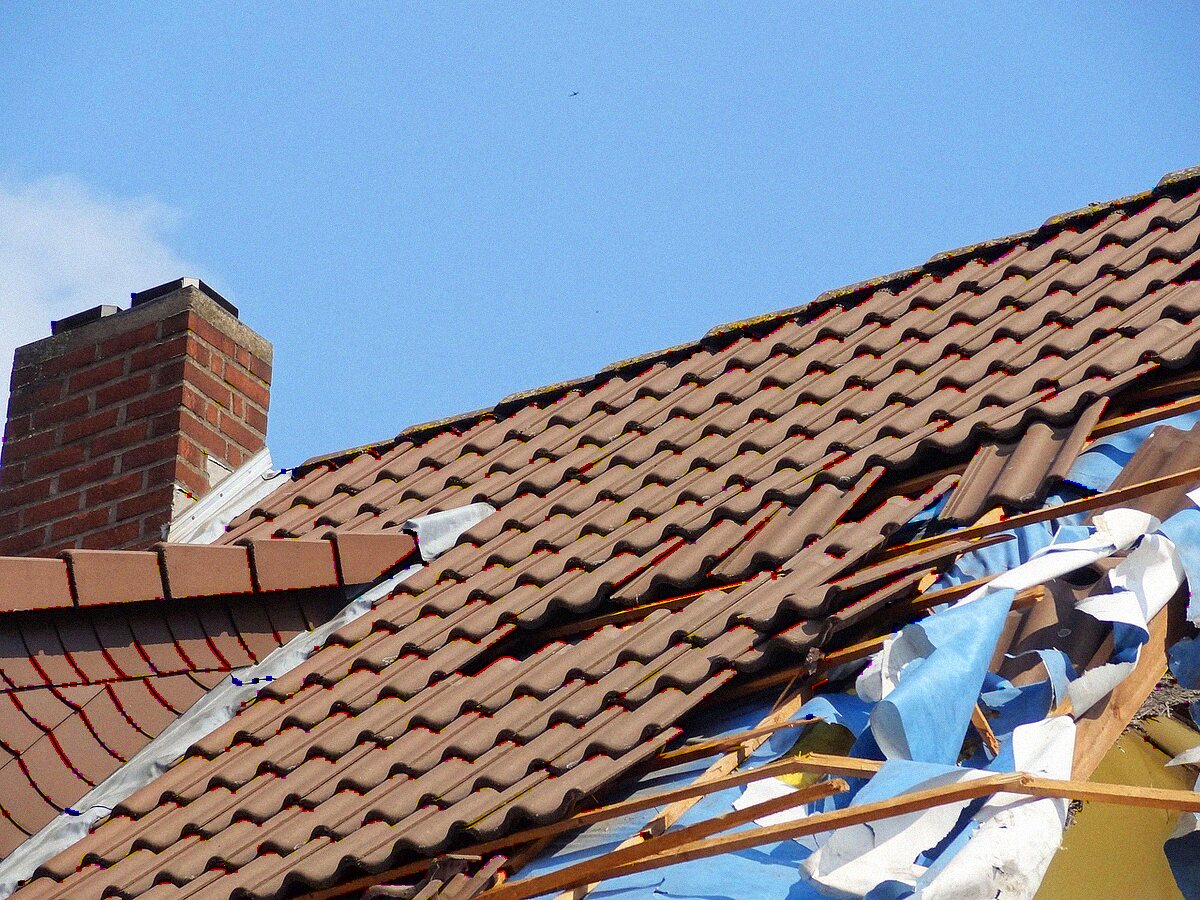
How Storm Water Gets In
- Roof intrusion, where wind lifts or displaces roofing and driven rain enters. On the tile roofs common in this area, slipped or cracked tiles expose the underlayment, which is what keeps water out
- Failed or aged underlayment, which is the usual reason an apparently sound roof leaks under sustained rain rather than in a brief shower
- Blocked gutters, valleys and scuppers, which force water back under the roof edge. On a flat roof a blocked scupper can pond a significant weight of water
- Wind-driven rain penetrating around windows, doors and wall penetrations, entering horizontally in a way ordinary rain does not
- Overwhelmed yard drainage, where surface water rises above a threshold or comes in under a door
- Storm drain surcharge, where the public system backs up and water enters at ground level
- Fallen branches or debris causing impact damage that opens the envelope
- Skylights, roof vents and swamp cooler or HVAC penetrations, which are common entry points under driven rain
The distinction that matters for the work is whether water came through the envelope from above or entered at ground level from outside. Roof intrusion arrives clean and is usually a drying job. Surface water has run across ground and is contaminated by definition, which means porous material comes out rather than being dried. The same storm can produce both in the same property, and they are different jobs.
Emergency Board-Up and Tarp-Over Comes First
Where the envelope is open, temporary protection is the first job. A tarp over a damaged roof section, board-up over a broken window or a forced door, and temporary weatherproofing of any penetration. This is not cosmetic and it is not optional: leaving a building open through a subsequent storm band converts a contained loss into a much larger one, and most winter storm systems arrive in sequences rather than singly.
Temporary protection also matters for what happens next. A roof left open between storm systems keeps taking water in, and every additional soaking enlarges the scope of what has to be replaced. Documenting that emergency protection was installed, and when, records that the property stopped getting wetter.
Photographs matter here more than in most water damage work, because the storm conditions themselves are evidence that disappears. Photograph the damage, the water entry point if it can be seen safely, the interior extent, and the temporary protection once installed. Do not go on a roof in wet or windy conditions to get a picture.
The Local Flood and Drainage Picture
The regional flood story is the Santa Ana River, which forms Costa Mesa's western boundary. Orange County Public Works records that the 1938 flood inundated parts of Anaheim, Santa Ana and Garden Grove and killed more than 50 people, and that the 1969 storm produced the largest dollar loss in county history. The Santa Ana River Project, a roughly 1.8 billion dollar programme across about 75 miles of river, exists to raise protection for more than three million people.
For most properties, though, the more relevant statement is the county's own about local drainage capacity. Orange County Public Works notes that parts of the county outside the river's 100-year inundation area remain exposed to flooding from storm water drainage facilities that are presently inadequate to carry a 100-year discharge. That is what floods garages and ground floors in a heavy storm, and it applies well away from the river.
On the western side of the county the named deficiency is specific: the county states that the East Garden Grove-Wintersburg Channel and Ocean View Channel system lacks the capacity to contain a 100-year flood, with banks and levees overtopped at several locations. That system drains Huntington Beach, Westminster, Garden Grove and Fountain Valley. In central county, the El Modena-Irvine Channel and Santiago Creek are named among at-risk drainage systems, which is the relevant note for Santa Ana and Tustin. Costa Mesa itself is served by the Santa Ana-Delhi Channel, a facility with documented silt and sedimentation problems.
What Restoration Involves After the Envelope Is Closed
Once the building is weathertight, the work follows the same principles as any water damage job, with the water category deciding the scope. Water that came through a roof and passed through insulation and ceiling assemblies is treated as at least Category 2. Water that entered at ground level from outside is Category 3, so porous materials are removed rather than dried.
Attic and roof space inspection is a step storm work needs and indoor leaks usually do not. Insulation that took water holds it, loses its thermal function and cannot be dried in place, so it comes out. Ceiling assemblies are opened where readings indicate, framing and sheathing are read and dried, and only then does the permanent roof repair and interior rebuild proceed.
The sequencing with roofing trades is worth understanding, since the permanent roof repair and the interior drying are frequently different contractors. The interior cannot be closed up until the roof is genuinely repaired rather than tarped, so a stalled roof repair stalls the whole job. Knowing who is doing which part, and when, is what keeps that from turning into weeks of waiting.
Tell Us What Has Happened
The line is answered 24 hours a day, every day of the year. If water is still running, shut off the main first, then call.
Why Costa Mesa Property Owners Choose Us
The Envelope Gets Closed Before Anything Gets Dried
Tarp-over and board-up come first, because conditioning a space that is still open to the weather achieves nothing and winter systems arrive in sequences rather than singly. It also matters for what follows: an opening left unprotected keeps taking water with every system that arrives, and documented emergency protection records when that stopped.
Roof Intrusion and Ground-Level Water Are Separated in the Scope
One storm can produce both, and they are different jobs: water through the roof arrives clean and is usually dried, while surface water entering at ground level has run across ground and is contaminated, so porous material comes out. Establishing which water did which damage, and documenting it, is what stops the whole property being treated as the more destructive case.
Wet Insulation and Roof Assemblies Get Inspected
Storm water arrives through the roof and passes through insulation and ceiling assemblies before it shows anywhere. Insulation that took water holds it and cannot be dried in a closed assembly, so the roof space is inspected and the wet material removed rather than left above a repaired ceiling. That is also the step whose omission produces a smell months later.
A common call during a winter storm sequence
The situation: a tile roof on a 1960s Costa Mesa house that lost several tiles in high wind, with driven rain then entering through the exposed underlayment overnight. Water staining across two ceilings, a light fitting holding water, and another storm band forecast within two days.
What gets done: power isolated to the affected circuits and the water relieved from the light fitting, then a tarp installed over the exposed roof section before any interior work, given the incoming weather. Attic inspection found saturated insulation across several joist bays, which was removed rather than dried. Ceilings opened to the extent the moisture readings indicated, framing and sheathing read and dried with logged readings, and the permanent roof repair scheduled with the roofing trade before the interior was closed.
The result: the second storm band does not add to the damage because the envelope was closed first, the wet insulation leaves the property instead of sitting above a repaired ceiling, and the roof repair and interior rebuild are sequenced deliberately rather than the interior waiting weeks on an unscheduled roofer.
Before you sign anything, know the warning signs
A short guide to the things that separate a straight operator from a bad one in this trade, plus how to check a California contractor licence in about two minutes.
Frequently Asked Questions
Should I put a tarp on my roof myself?
Not during or immediately after a storm. Wet tile and wet sloped roofing are extremely slippery, wind makes handling a tarp dangerous, and roof falls are a leading cause of serious injury in storm aftermath. Photograph what you can see from the ground, contain water inside the property with containers, and have the temporary protection installed by someone equipped for it.
Water came in through the ceiling and there is a bulge. What do I do?
Keep out of the room and do not push the bulge, because saturated drywall loses its strength and can come down as a whole sheet. Turn off power to that circuit if a light fitting is in the affected area, since water collects in recessed fittings. Relieving that water in a controlled way at a low point is part of the emergency response and is safer than waiting for the material to fail.
My roof is not leaking anywhere else. Do you still need to look in the attic?
Yes, and it is one of the more important steps in storm work. Water enters at the roof and travels through insulation and along framing before appearing on a ceiling, so the wet area above is generally much larger than the stain below and can extend well away from it. Insulation that took water cannot be dried in place, so finding it is what determines the real scope.
Another storm is coming. Can the work be finished before it?
The realistic answer is that the priority shifts: closing the envelope comes first so the next system does not add to the loss, and the interior drying continues through and after it. Putting a date on a completed repair before assessing the damage would not be honest. What can be done quickly is the temporary protection, and that is what limits the total damage.
Related Services
Water Damage Restoration
Full water damage response for Costa Mesa homes, from the first extraction pass through to drying, clearance and repair.
Read more →Flood Damage Cleanup
Cleanup after storm runoff, channel overflow or rising water reaches the inside of a property.
Read more →Ceiling Leak Water Damage
Brown rings, sagging drywall and the upstairs bathroom that has been leaking quietly for weeks.
Read more →Water Damage Repairs and Reconstruction
Putting the property back: drywall, texture, paint, baseboard, cabinetry and flooring, with the handoff explained in writing.
Read more →See all 14 water damage services, or start from the Costa Mesa water damage overview. Background on how the business works is on the about page.